
We hold strict safety standards for students interacting with AI. Students never use a text-input AI. There is no chatbot, no open-ended prompt, no place to type. Students tap picture cards; AI runs entirely behind the scenes to assemble a decodable, skill-aligned story from their selections.
How It Works
1
Choose a character
The student taps through a carousel of character cards.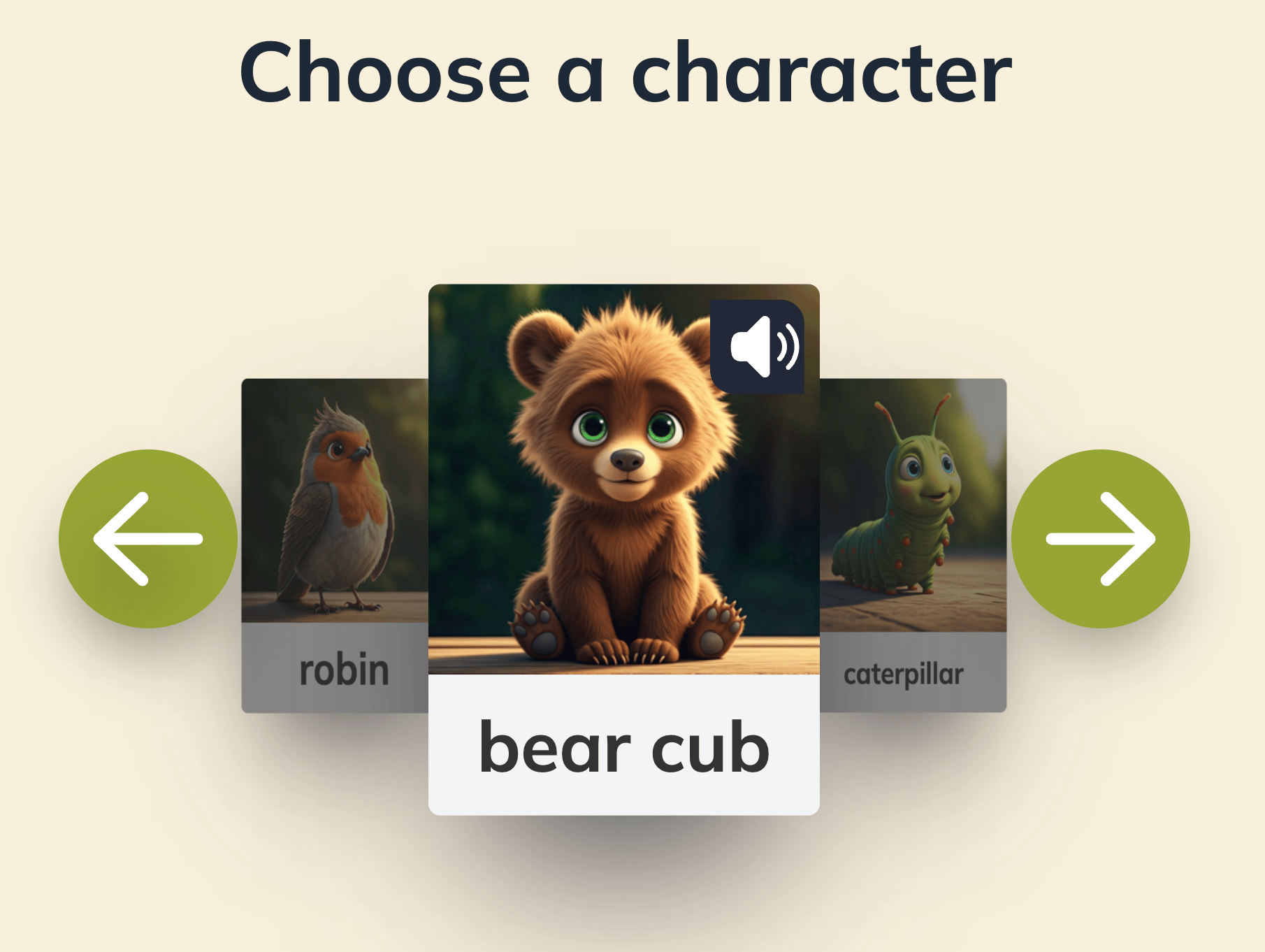
2
Choose a setting (if available)
If the chosen character has settings tied to it, the student picks one; if not, this step is skipped automatically.
3
Choose a name
The student taps a name card — one of the options is always pre-filled with their own first name.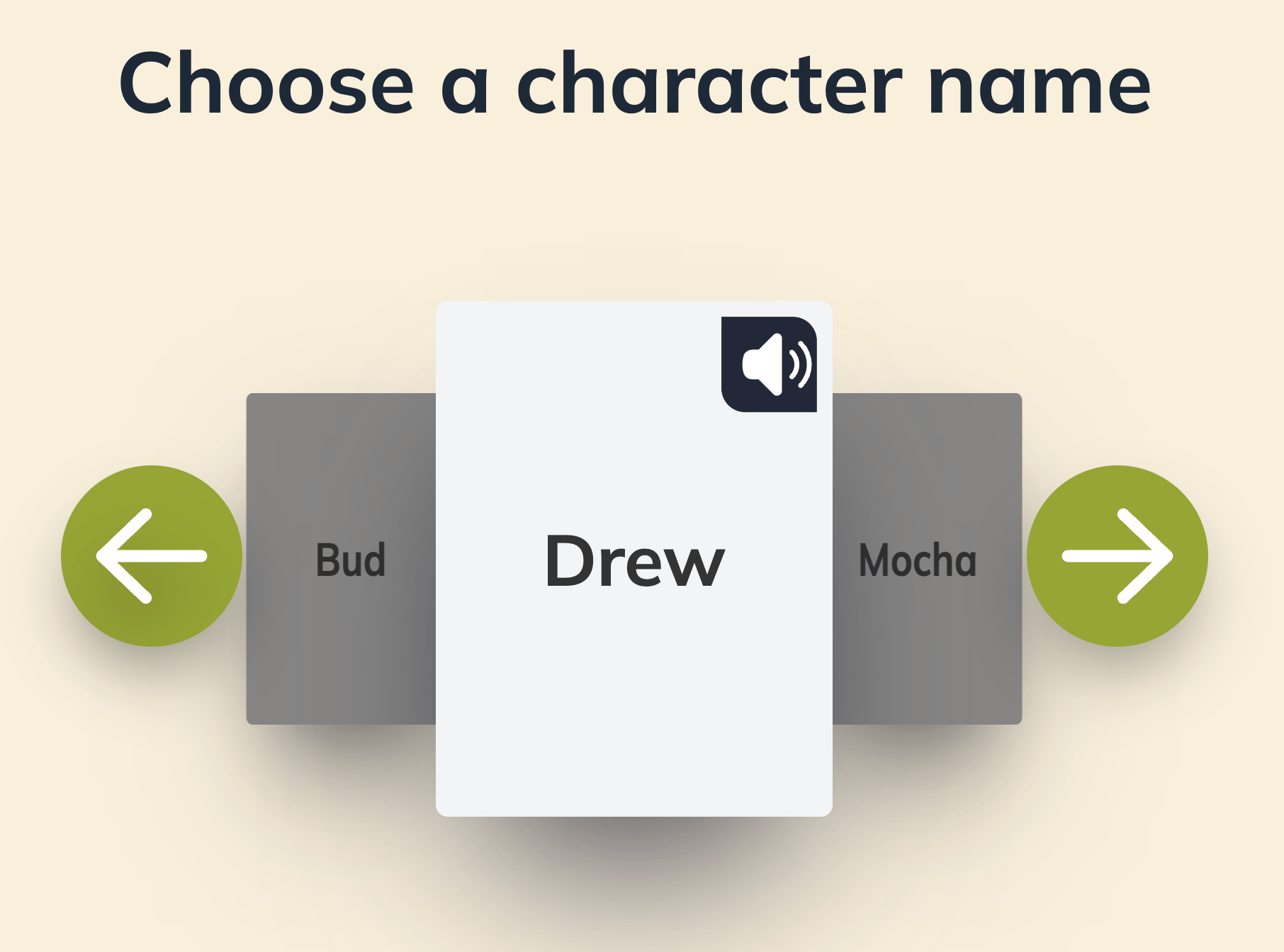
4
LitLab generates the story
A decodable story is built from the student’s selections, aligned to whatever skill they’re currently assigned.As students wait for the story to generate, they play a High-Frequency Word matching game, with words that come directly from the skill you assigned them.
5
Students read their story
The student reads their personalized story.
Students do not record while reading their creations. Recording is available for assigned texts.
Why It Works for Developing Readers
- Agency without risk. Students feel ownership without any open-ended AI input.
- Motivation. Students re-read their own story more willingly than an assigned one.
- A name they know. One of the name options is always their own first name — many students pick it.
What You Control
Students are capped at a fixed number of 3 creations per day platform-wide.
Classroom Ideas
- Independent rotation. Students who finish their assigned story early can build one for fun.
- Choice writing. Use the Student Creator as the “draft” stage of a writing block — students see model decodable structure.
- Engagement boost. Reluctant readers often re-read their own creations dozens of times.