
Non-fiction is one of three decodable types in LitLab’s generator — Fiction, Non-fiction, and Reader’s Theater all live on the same Generator page; switch between them with the tabs at the top.
Why Nonfiction Decodables Matter
The Science of Reading research is clear: vocabulary and background knowledge are major drivers of reading comprehension. Pairing decodable practice with science and social studies content builds both at once.Generating a Nonfiction Text
1
Set the phonics skill
Choose “Decodable up to what skill?” for your phonics program. Nonfiction passages tend to be slightly less decodable than Fiction or Reader’s Theater texts, since the topic itself constrains word choice. A passage may not concentrate heavily on target skill words, but it stays highly readable up to the skill you select.
2
Enter a topic
Type any topic as free text (e.g., “Why do animals hibernate in the winter?”). Every topic is checked against content moderation before generating. A topic is required: the grey text in the empty box is only an example, and Create decodable stays greyed out until you type your own topic.
3
Add vocab words (optional)
Enter up to 3 comma-separated, content-specific words you want woven into the text (e.g., “hibernate, burrow, mammal”). Adding vocab words may reduce decodability.
4
Choose illustrations (Beta)
Under Illustration preferences, pick No illustrations (text only), One illustration (a single realistic image of the topic on the first page — the default), or Fully illustrated (a realistic image representing the text on every page).
5
Generate
LitLab produces an informational text aligned to your topic and phonics skill.
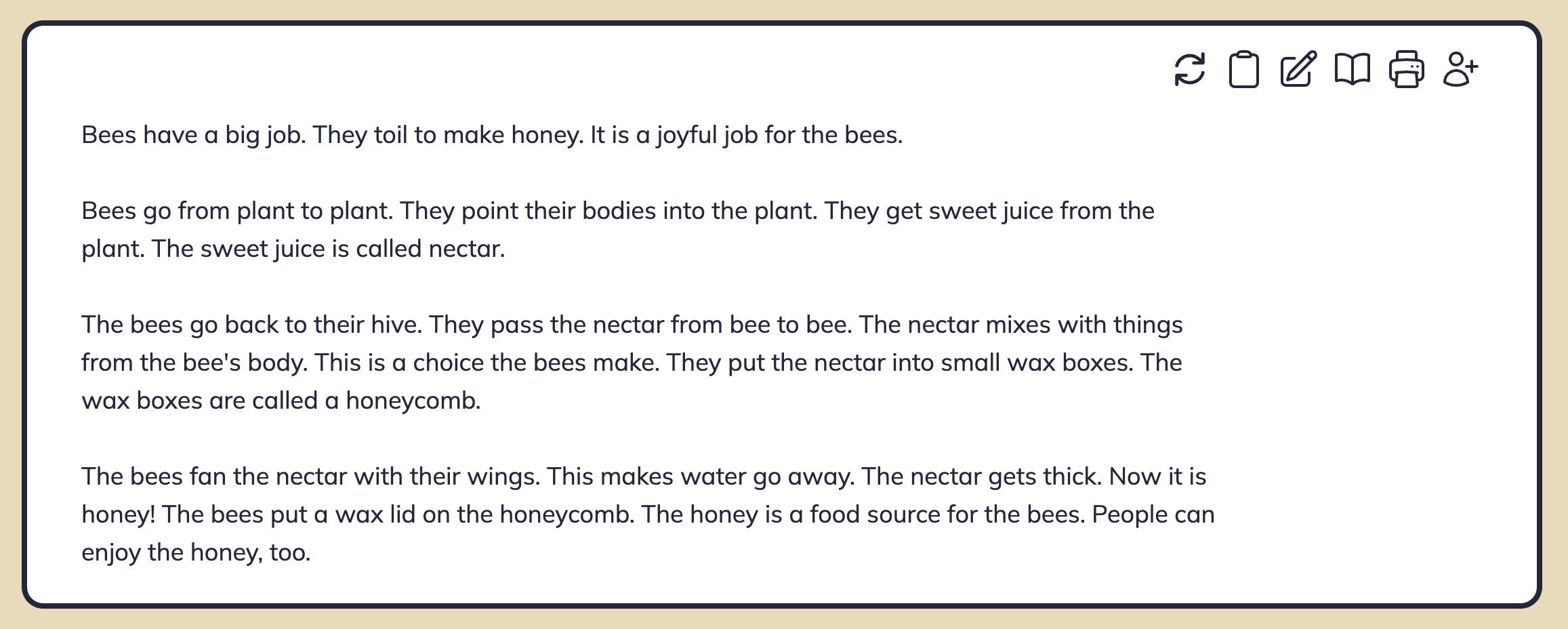
There’s no length control to set for nonfiction; each text uses a standard length for the selected skill.
Aligning with Your Curriculum
Nonfiction decodables work especially well when paired with:- Science units — read a decodable on plants while you teach a plant unit
- Social studies content — community helpers, holidays, U.S. symbols
- Cross-curricular themes — friendship, kindness, problem-solving